

By Connor Clark
Poison Tree Tattoo Meaning is a poison tree tattoo represents suppressed anger and hidden resentment — emotion that doesn’t disappear when you swallow it, but grows instead. The design traces back to William Blake’s 1794 poem “A Poison Tree,” and today people wear it to mark betrayal, a toxic relationship, or the choice to finally deal with anger instead of burying it.
What Is a Poison Tree Tattoo?
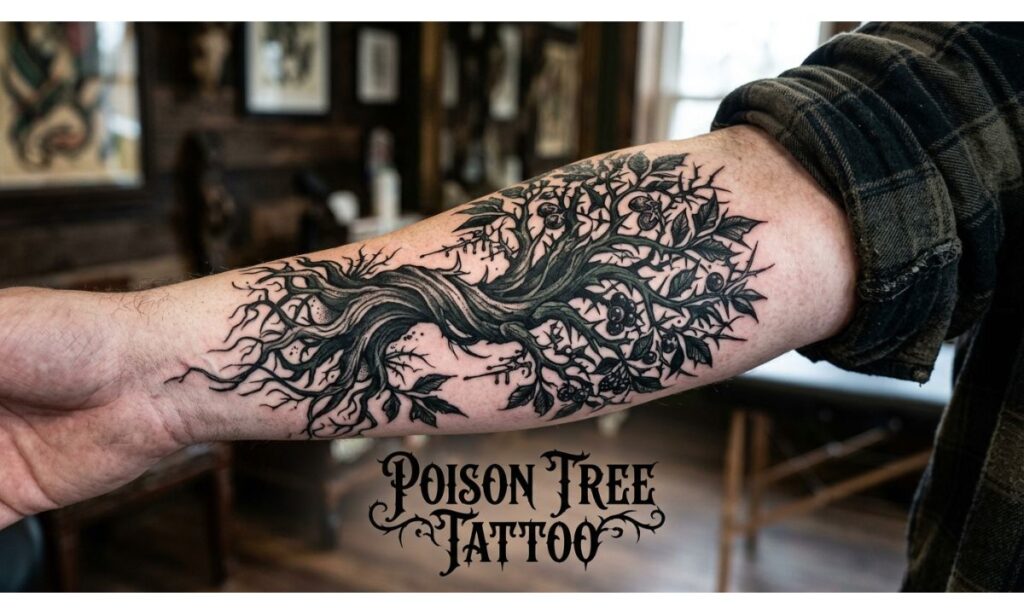
A poison tree tattoo is exactly what it sounds like, and it’s meant to look a little wrong. Instead of a healthy, leafy tree, you get something twisted: bark that cracks, branches that bend at sharp angles, thorns instead of soft growth. Somewhere on the tree hangs fruit — often a single piece, sometimes glowing, sometimes dripping — and that fruit is the whole point of the design.
This isn’t a “tree of life” tattoo with its full canopy and tangled roots symbolizing growth and connection. A poison tree tattoo is quieter and darker. It’s not trying to look pretty. It’s trying to look like something that grew from a small, buried feeling into something dangerous — because that’s exactly the story it’s telling.
The Origins: William Blake’s “A Poison Tree” (1794)
The symbol comes straight from literature. English poet William Blake published “A Poison Tree” in 1794 as part of his collection Songs of Experience, a set of poems exploring the darker, more complicated side of human emotion — the counterpart to the innocence he’d written about in an earlier collection.
The poem’s idea is simple and brutal: anger you talk through with a friend fades away. Anger you hide from an enemy doesn’t fade — it gets watered by fear, fed by smiles you don’t mean, and eventually it grows into a tree. That tree bears a single poisoned piece of fruit, and the person you were angry at eventually takes it.
Blake wasn’t writing about literal poison. He was describing what happens when we choose silence over honesty — how resentment left to sit in the dark doesn’t stay small. It compounds. The poem is only a few short stanzas, but the metaphor is precise enough that it’s outlived its century and become a tattoo people still choose 230 years later.
Poison Tree Tattoo Meaning: Core Symbolism
Strip away the literary reference and the core idea is something almost everyone recognizes: what you don’t say out loud doesn’t vanish. It just moves somewhere else — under the surface, where it has room to grow.
Suppressed anger and resentment. This is the most direct reading, straight from Blake. The tattoo represents the gap between what someone feels and what they actually say, and the cost of letting that gap sit too long.
Toxic relationships and betrayal. A large share of people who get this tattoo are marking the end of a specific relationship or friendship — one where trust broke down and the hurt was never fully spoken.
A biblical echo. The single poisoned fruit hanging on the tree calls back to the Tree of Knowledge in Genesis — temptation, consequence, and a choice that can’t be undone. Some wearers lean into this overlap on purpose, using the tree to represent a specific regret or turning point rather than Blake’s poem specifically.
It’s worth knowing how this differs from its more popular cousin, the tree of life tattoo. Visually the two can look similar — both are trees, both can be detailed and symbolic — but they’re saying almost opposite things. A tree of life points toward growth, family, and connection. A poison tree points toward something that went wrong internally and grew in the dark.
If what you want to say is “I overcame something,” a tree of life probably fits better. If what you want to say is “I’m naming something specific I went through,” the poison tree stays more accurate.
Who Gets a Poison Tree Tattoo — and Why
People choosing this design tend to cluster around a few overlapping reasons, and most wearers are working through more than one at the same time:
- Marking the end of a toxic relationship, friendship, or working relationship
- Processing a specific betrayal that was never resolved out loud
- A personal reminder to speak up instead of letting resentment build
- Documenting a period of healing — naming the anger so it loses some of its grip
None of these meanings cancel each other out. That’s part of why the design has staying power: it’s specific enough to feel personal, but flexible enough to fit very different stories.
Popular Design Variations
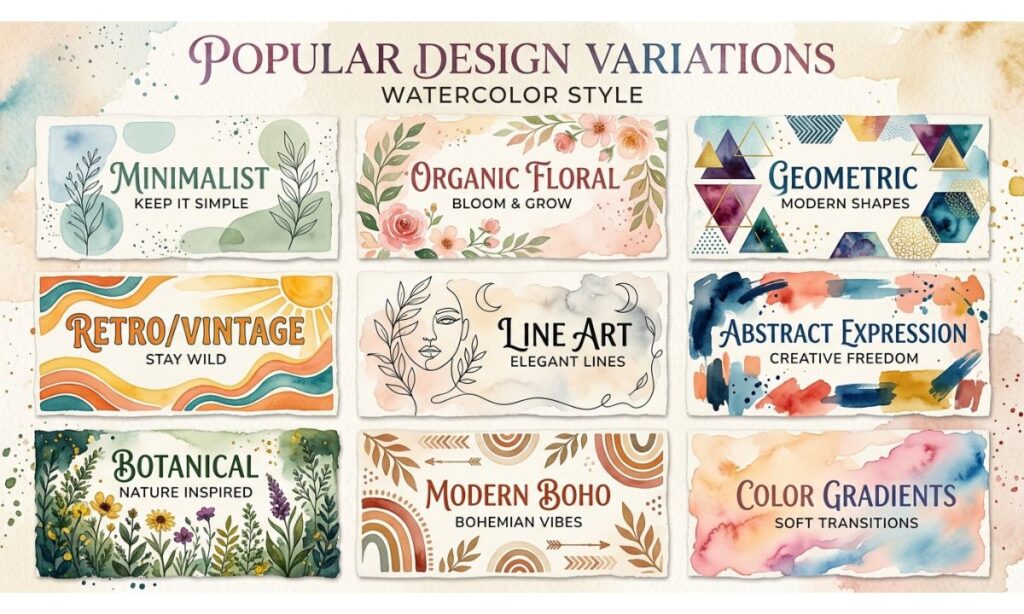
The poison tree tattoo shows up in a wide range of styles, and the version someone picks usually says as much as the symbol itself.
Black and Grey Gothic Style

Heavy shading, cracked bark, and sharp, aggressive branch work. This is the most literal read of “dangerous tree” — dramatic, unapologetic, and built to be noticed.
Blake-Inspired Illustration
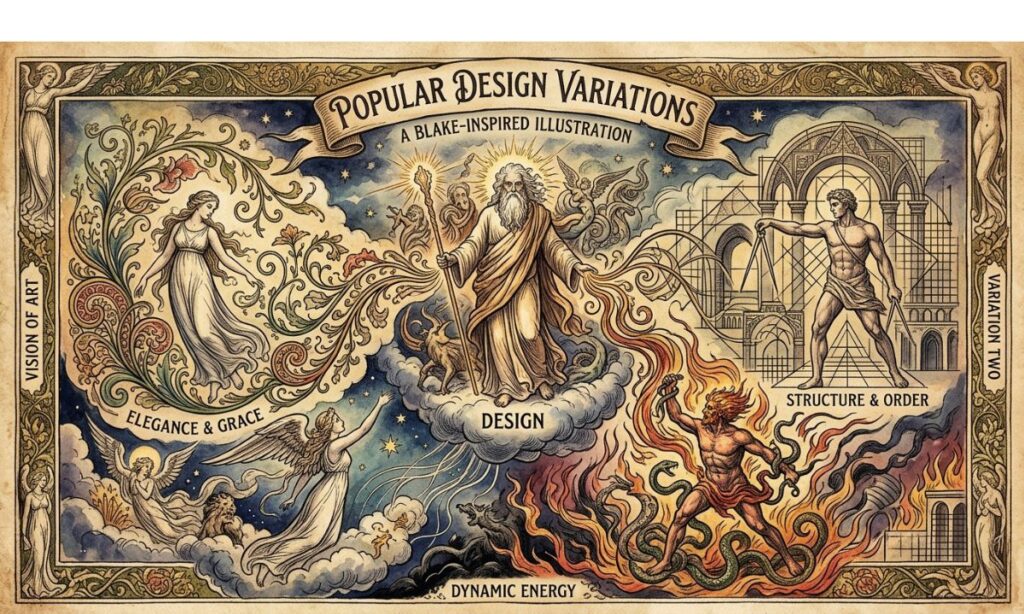
Designs that lean into the literary source directly, sometimes incorporating a serpent, an apple, or script-style elements that nod to the poem without spelling it out.
Half-Dead, Half-Living Tree
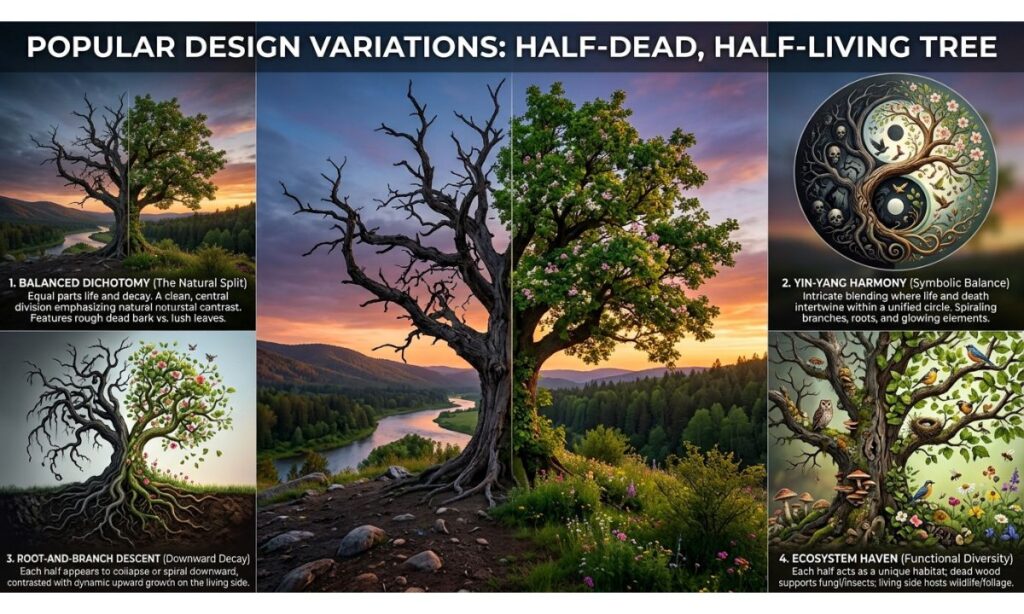
One side of the tree is bare and cracked; the other still has leaves or new growth. This variation is popular with people who want the design to represent healing in progress rather than a fixed, finished emotion.
Serpent and Fruit Motif
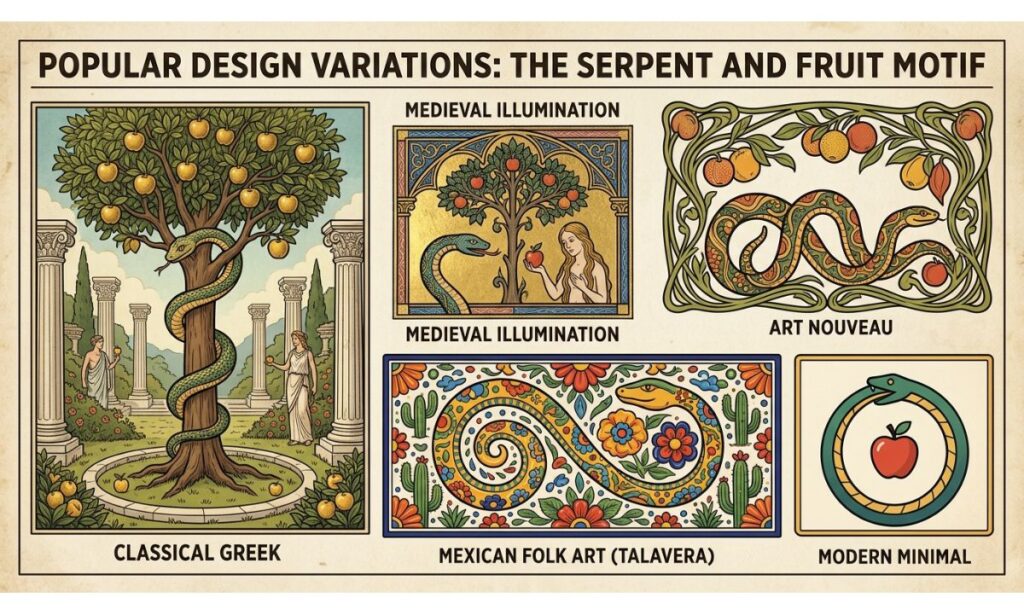
A snake coiled around the trunk or branches, paired with the single piece of fruit — pulling the biblical parallel to the front of the design.
Heartfruit Design
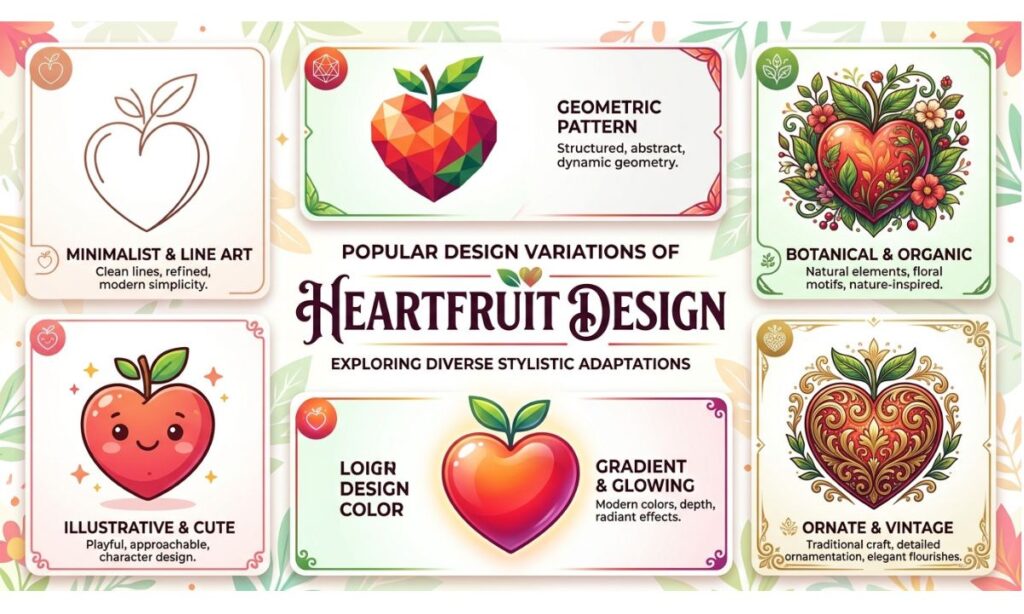
Instead of a generic apple, the fruit is shaped like a heart, making the emotional read (a poisoned feeling toward someone once close) more literal and personal.
Minimalist Line Art
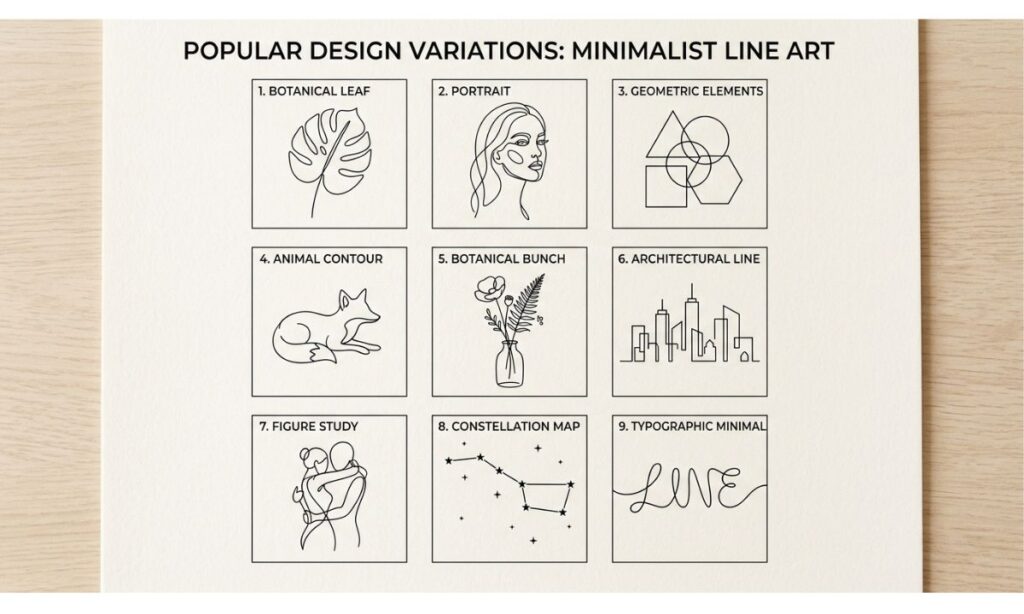
A simple, single-line silhouette of a twisted tree. This version trades drama for subtlety — the meaning is still there, but it’s quiet enough to wear anywhere, including smaller spots like the wrist or ankle.
Watercolor Style
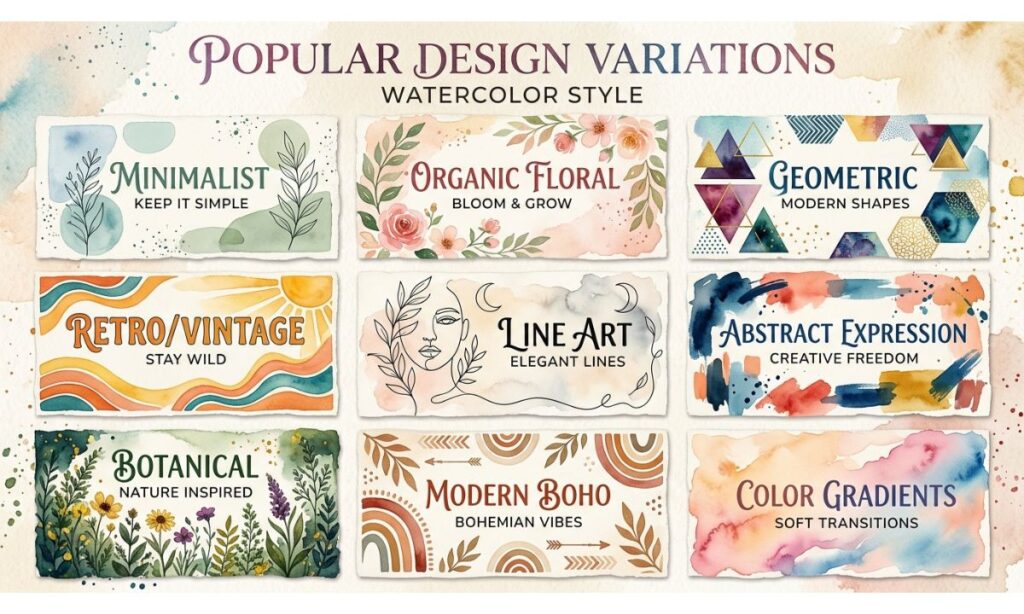
Bleeding, ink-like color washes around a darker linework tree. This softens the harshness of the symbol visually while keeping the meaning intact — often chosen by people who want something dark conceptually but not visually heavy.
Color Meanings in Poison Tree Tattoos
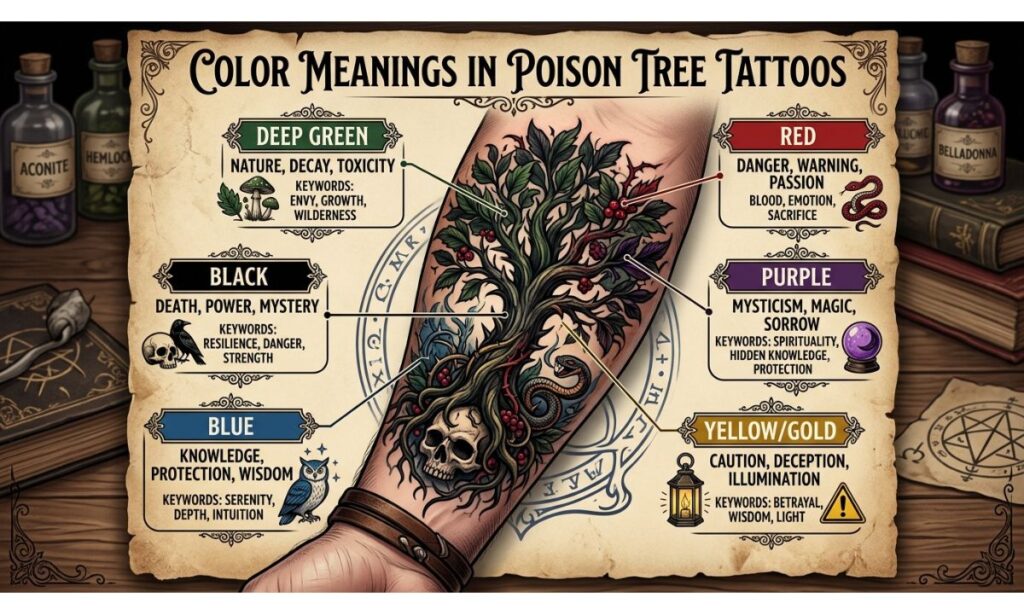
Most poison tree tattoos lean into black, grey, and deep reds — black and grey for the shadow and secrecy at the center of the symbol, and a single spot of red or dark purple on the fruit to draw the eye to the “poison” itself.
Green is used sparingly, if at all, since a fully healthy-looking tree undercuts the whole point. When green does appear, it’s often confined to the “living” half of a half-dead, half-living design, marking the part of the story that’s about growth rather than decay.
Best Placement Options for a Poison Tree Tattoo
- Forearm — visible, easy to show off, and a common choice for people who want the meaning to be part of an open conversation rather than something hidden.
- Upper arm or shoulder-to-back — gives detailed versions (gothic, serpent-and-fruit, Blake-inspired) enough room to actually show the linework and shading.
- Ribs or sternum — a more private, intimate placement, often chosen for a design that’s meant to be personal rather than public.
- Wrist or ankle — the go-to spot for minimalist line-art versions, small enough to feel subtle while still carrying the full meaning.
- Neck — a bolder, harder-to-hide placement some wearers choose specifically because it mirrors the idea of buried anger finally surfacing.
Psychological Dimension: Why This Symbol Resonates So Deeply
Part of the reason this design has stuck around for over two centuries is that it names something almost everyone has felt but rarely puts into words: the specific discomfort of smiling at someone while quietly holding onto anger toward them. Most symbols try to dress up difficult emotions — turn them into something noble or soft.
The poison tree doesn’t do that. It shows exactly what happens when resentment gets fed in silence instead of released, without pretending that process is comfortable or admirable.
For a lot of wearers, getting the tattoo isn’t about celebrating that cycle — it’s about naming it on purpose, in a permanent way, so it stops operating quietly in the background.
FAQ’s
Is a poison tree tattoo a negative symbol?
Not inherently — it’s honest rather than negative. The design acknowledges anger and resentment exist, but for most wearers it’s less about celebrating those feelings and more about naming them so they lose some of their power.
Does a poison tree tattoo have to reference William Blake?
No. Plenty of people choose this design purely for its visual meaning — hidden toxicity or buried anger — without knowing the poem exists. Knowing the literary source adds depth, but it isn’t a requirement to “get it right.”
Can a poison tree tattoo symbolize healing?
Yes, especially in the half-dead, half-living variation. Many wearers choose this design specifically to mark the point where they started addressing a hurt instead of burying it, which reframes the symbol as a turning point rather than a permanent state.
What elements pair well with a poison tree tattoo?
Serpents, ravens, thorns, and small script details are the most common additions, each reinforcing a slightly different angle on the same core idea — temptation, watchfulness, or the specific weight of what’s being carried.
Conclusion
A poison tree tattoo endures because it doesn’t try to soften anything. It takes a feeling most people recognize — the quiet cost of staying silent instead of speaking up — and turns it into a single, permanent image.
Whether you’re drawn to it for Blake’s poem, for a relationship that ended badly, or for a quieter reason of your own, the version worth getting is the one that matches where you actually are in that story, not just where the poem ends.
If symbols and their stories are your thing, you’ll probably enjoy digging through more of the meanings we cover here.
