

Quick Answer: ION meaning in texting refers to a shortened way of saying “I don’t,” written the way it sounds when spoken quickly. It’s casual slang rooted in African American Vernacular English (AAVE), popular in phrases like “ion know” or “ion care.” A rarer second meaning is “In Other News.”
ION Meaning at a Glance ⭐
| Detail | Info |
|---|---|
| Most common meaning | “I don’t” |
| Secondary meaning | “In Other News” |
| Origin | African American Vernacular English (AAVE) |
| Tone | Casual, relaxed, sometimes dismissive |
| Who uses it most | Gen Z, teens, young adults |
| Common platforms | TikTok, Twitter/X, Instagram, Snapchat |
| Formal or informal? | Strictly informal |
| Non-slang meaning | Ion — a charged atom or molecule (chemistry/physics) |
What Does ION Mean in Text?
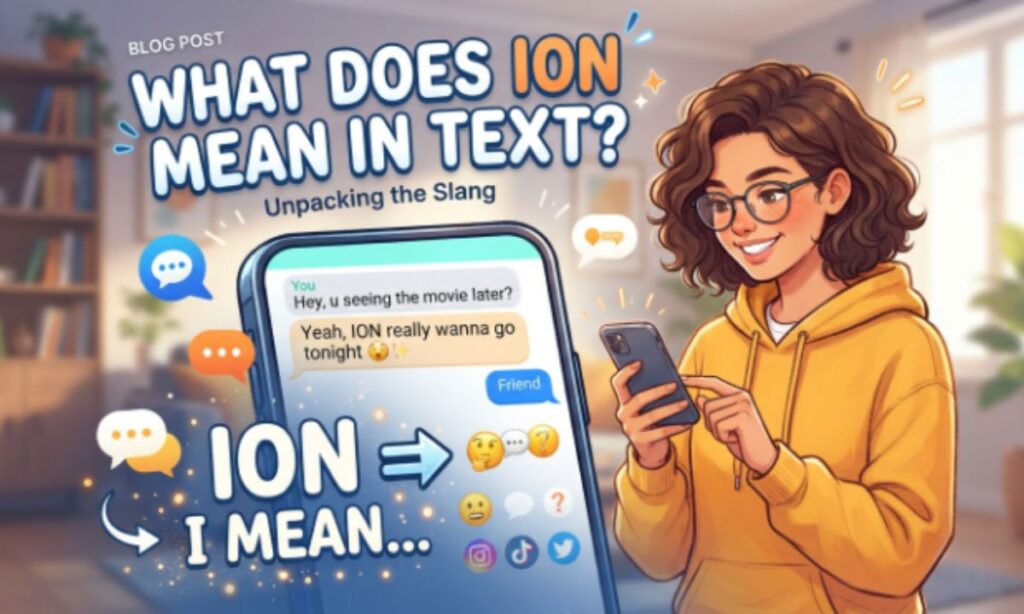
When you see “ion” in a text or comment, it’s almost always standing in for “I don’t.” It’s not a typo and it’s not always about science — it’s a phonetic spelling of how “I don’t” actually sounds when people say it fast and casually.
Say “I don’t know” quickly out loud, and it comes out closer to “ion-oh” than “I don’t know. “This spelling comes from AAVE, where contracted, sound-based spellings are common in casual writing. It picked up speed through Twitter and later TikTok, where users lean toward typing words the way they’re spoken rather than the way they’re formally written.
A much smaller share of usage treats ION as an acronym for “In Other News,” typically used to signal an abrupt topic change in a caption or message. Context almost always makes clear which one is meant — if “In Other News” doesn’t make grammatical sense in the sentence, it’s the “I don’t” version.
Breaking Down the Meaning (“Ion” = “I Don’t”)
- “Ion” replaces “I don’t” as a single, quick-typing word.
- It keeps the negative meaning of “I don’t” fully intact.
- No apostrophe, no capital letters — that’s part of the casual style.
- It works anywhere “I don’t” would normally go in a sentence.
Common Phrases Using ION (ion know, ion care, ion think so)
- “Ion know” – “I don’t know.”
- “Ion care” – “I don’t care.”
- “Ion think so” – “I don’t think so.”
- “Ion like that” – “I don’t like that.”
- “Ion feel like it” – “I don’t feel like it.”
Where Is ION Commonly Used?
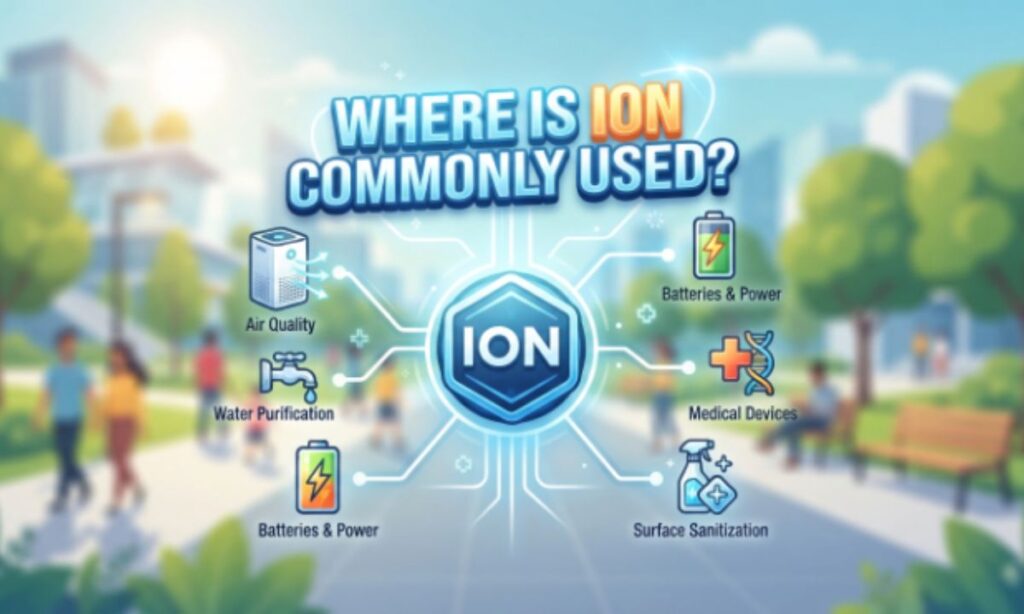
ION shows up mainly in fast, informal digital spaces — texting, tweets, TikTok comments, and casual captions. It’s especially common in exchanges where someone wants to sound relaxed or slightly detached, since “ion” softens a flat “I don’t” into something more conversational.
It’s most popular with Gen Z and younger millennials, and it’s tightly linked to spoken-language texting styles, where people type the way they talk rather than the way grammar textbooks would want them to.
Tone & Style (casual vs. formal)
| Setting | Should you use ION? |
|---|---|
| Texting friends | ✅ Yes |
| Twitter/X posts | ✅ Yes |
| TikTok comments | ✅ Yes |
| Work email | ❌ No |
| Academic writing | ❌ No |
| Customer service chat | ❌ No |
ION Meaning on Each Social Media Platform ⭐
The core meaning of ION stays the same across apps, but how often — and how casually — it’s used shifts slightly by platform.
ION Meaning on Snapchat
On Snapchat, ION almost always means “I don’t,” typically used in quick captions or chat replies like “ion even remember that 💀.”
ION Meaning on TikTok
TikTok is one of ION’s biggest homes. In comments and captions, it’s used constantly as “I don’t,” and the platform is largely responsible for spreading it beyond AAVE-speaking communities.
ION Meaning on Instagram
On Instagram, ION appears in DMs, captions, and comments, almost always meaning “I don’t,” often paired with emojis to soften or emphasize the tone.
ION Meaning on Discord
In Discord chats, ION is used the same way as texting — a fast, informal “I don’t,” common in gaming servers and casual community chats.
ION Meaning on Twitter/X
Twitter/X is where ION first gained real traction as slang. It’s used heavily as “I don’t,” and occasionally as “In Other News” when someone’s pivoting to a new topic.
ION Meaning on WhatsApp
On WhatsApp, ION shows up in casual group chats and one-on-one messages between friends, almost always as a quick way of writing “I don’t.”
Other Meanings of ION (Beyond Slang)
Outside of texting, “ion” isn’t slang at all — it’s a real scientific term with a completely different meaning.
ION in Chemistry
In chemistry, an ion is an atom or molecule that has gained or lost electrons, giving it a positive or negative electric charge. Ions are fundamental to how compounds form and react with one another.
ION in Physics
In physics, ions matter for concepts like electric charge, conductivity, and particle behavior. Ion movement is also central to technologies like ion propulsion and battery chemistry.
Comparison Table: ION Meaning by Context
| Context | ION Meaning |
|---|---|
| Texting (general) | I don’t |
| Casual captions | In Other News (occasional) |
| Chemistry | Charged atom or molecule |
| Physics | Charged particle |
| Medicine | Electrolytes/ions regulating nerve & muscle function |
| Engineering | Ion propulsion systems |
Real Conversation Examples Using ION
- Friend A: “Are you coming to the party tonight?” Friend B: “Ion know yet, might be busy.”
- Tweet: “Ion care what people think tbh.”
- Group chat: “Ion think that’s a good idea 😭”
- Comment: “Ion even remember posting this lol.”
- DM: “Ion feel like going out today.”
Usage Guide — When to Use ION (and When Not To)
✅ Do Use ION When…
- You’re texting friends or close peers.
- You’re posting casual captions or comments.
- You want a relaxed, low-effort tone.
- The context makes “I don’t” the obvious meaning.
❌ Don’t Use ION When…
- You’re writing a professional email or message.
- You’re speaking with someone unfamiliar with slang.
- The setting is academic, legal, or customer-facing.
- You need to avoid any risk of misunderstanding.
Is ION Rude or Unprofessional?
ION isn’t inherently rude — it’s simply casual. But because it strips out tone, “ion care” can come across as dismissive or blunt in a serious conversation, even if that wasn’t the intent. In professional or unfamiliar settings, it reads as unpolished slang, so it’s best reserved for people who already text casually.
Why This Slang Caught On
ION caught on because it mirrors how people actually speak. Instead of typing the full “I don’t,” users spell it the way it sounds when said quickly — a habit rooted in AAVE and amplified by texting culture, where speed and authenticity often matter more than textbook grammar.
Twitter’s short-form format and TikTok’s caption culture gave it a massive platform, turning a regional speech pattern into a widely recognized piece of internet slang.
Similar Slang Words & Alternatives to ION
- IDK – I Don’t Know
- IDC – I Don’t Care
- NAH – No
- TBH – To Be Honest
- FR – For Real
- IMO – In My Opinion
How to Reply to ION
Matching the casual tone is the easiest way to reply. A few natural responses:
- “That’s fair, no worries.”
- “Same tbh.”
- “Okay, lmk if that changes.”
- “Fair enough 😂”
There’s no need to correct the grammar — just respond the way you would to “I don’t.”
Frequently Asked Questions
What does ION stand for?
ION most often stands for “I don’t,” used as a fast, phonetic spelling in casual texting. It can occasionally mean “In Other News.”
What does ION mean in science?
In science, an ion is an atom or molecule with an electric charge, caused by losing or gaining electrons.
Is ION the same as “idk”?
Not quite — “idk” means “I don’t know,” while “ion” means “I don’t” and can attach to many different words, like “ion care” or “ion think so.”
What does ION mean in a text from a girl/guy?
It carries the same meaning regardless of sender — “I don’t” — though tone and emojis around it can make it feel playful, dismissive, or neutral.
Where did ION originate as slang?
It originated in African American Vernacular English (AAVE) as a phonetic spelling of “I don’t,” later spreading widely through Twitter and TikTok.
Can ION be used professionally?
No — ION is casual slang and should be avoided in emails, academic writing, or any formal communication. Use “I don’t” instead.
Conclusion
At its core, ION meaning comes down to one simple swap: it’s a fast, casual way of writing “I don’t,” born from spoken language and spread through texting culture.
While a smaller slice of usage treats it as “In Other News,” and chemistry students know it as a charged particle entirely, the slang meaning is what dominates group chats, captions, and comment sections in 2026.
Once you know the pattern, spotting “ion know” or “ion care” in the wild is no longer confusing — it’s just another shortcut in the ever-evolving language of texting.
