

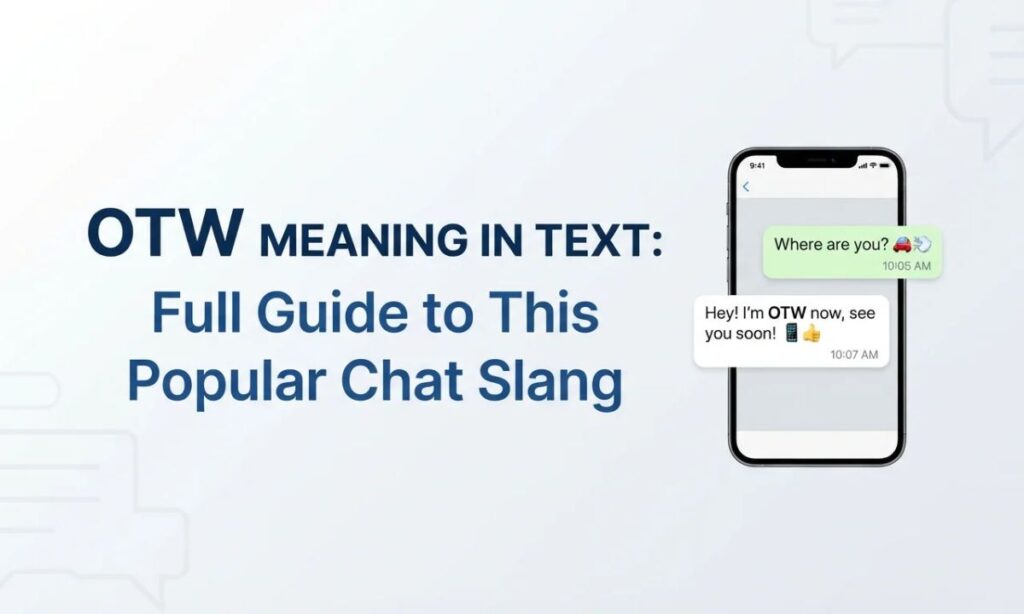
Someone types “otw” and, in three letters, tells you exactly what’s happening: they’ve left, and they’re headed your way. The OTW meaning lives in that small window between leaving and arriving.
This guide breaks down what OTW means, how it compares to OMW, and how it shows up across chats and social media.
Quick Answer
OTW stands for “On The Way,” telling someone you’ve already left and are heading toward them. The OTW meaning is a close cousin of OMW (“On My Way”), used almost interchangeably in casual texting.
Key Takeaways
- Core meaning: “On The Way,” confirming that someone has left and is heading somewhere.
- Near-twin of OMW: Both mean the same thing; OTW just drops the “my.”
- Timing matters: It describes the moment after leaving, not before.
- Language-independent: Used the same way in Tagalog and other language chats, just borrowed straight from English.
- Casual only: Fine for texts, less suited to formal writing.
The Small Window Between Leaving and Arriving
The OTW meaning captures a very specific, narrow moment: not “I’m about to leave,” and not “I’ve arrived,” but the stretch in between. It’s a quick update meant to stop someone from wondering whether you’re coming at all, sent the instant travel actually starts.
What Does OTW Mean in Text & Chat?
In texting, the OTW meaning is simply “On The Way,” letting someone know you’ve left and are currently heading toward them or a specific place.
OTW vs OMW: Is There Really a Difference?
Barely. Both phrases describe the same action, and most people swap between them without a second thought.
| Term | Full Form | Difference |
|---|---|---|
| OTW | On The Way | Slightly more general, doesn’t specify whose way |
| OMW | On My Way | Specifically centers on “my” journey |
In practice, both are read the same way: someone has left and is en route.
Full Form of OTW
The full form behind the OTW meaning is simply “On The Way,” three plain words shortened for speed.
Where Did OTW Come From?
This casual OTW meaning grew alongside mobile texting, as short travel updates became common shorthand for letting someone know your status without a full sentence. It follows the same pattern as other short, practical texting abbreviations built for speed.
Who’s Texting You “OTW”? What It Really Means
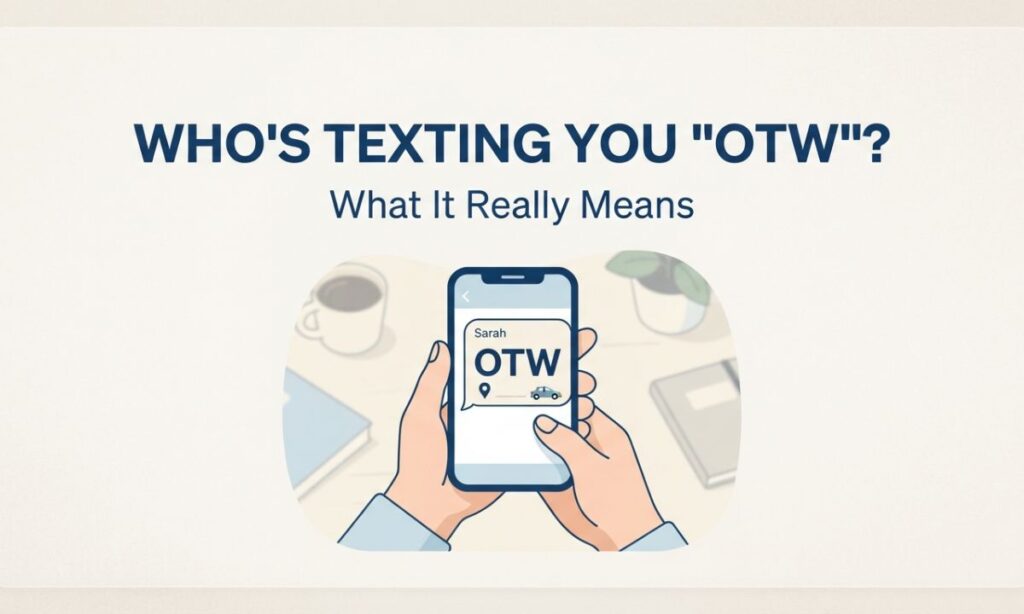
From a Girl
When a girl texts “otw,” it’s a simple, practical update: she’s left and is heading your way.
In a Relationship
Within a relationship, the OTW meaning usually carries no extra weight beyond the literal one, just a quick heads-up before arriving.
What Does OTW Mean in Tagalog Chat?
In Tagalog-language texting, the OTW meaning is used exactly the same way as in English. It’s borrowed directly into everyday chat rather than translated, so “otw na” simply adds “already” to say someone is on their way now.
Does OTW Have a Medical Meaning?
There’s no widely confirmed, standardized medical expansion for OTW. If it shows up in a clinical document, it’s most likely internal shorthand specific to that setting rather than a universal term.
How People Use OTW in Daily Conversations
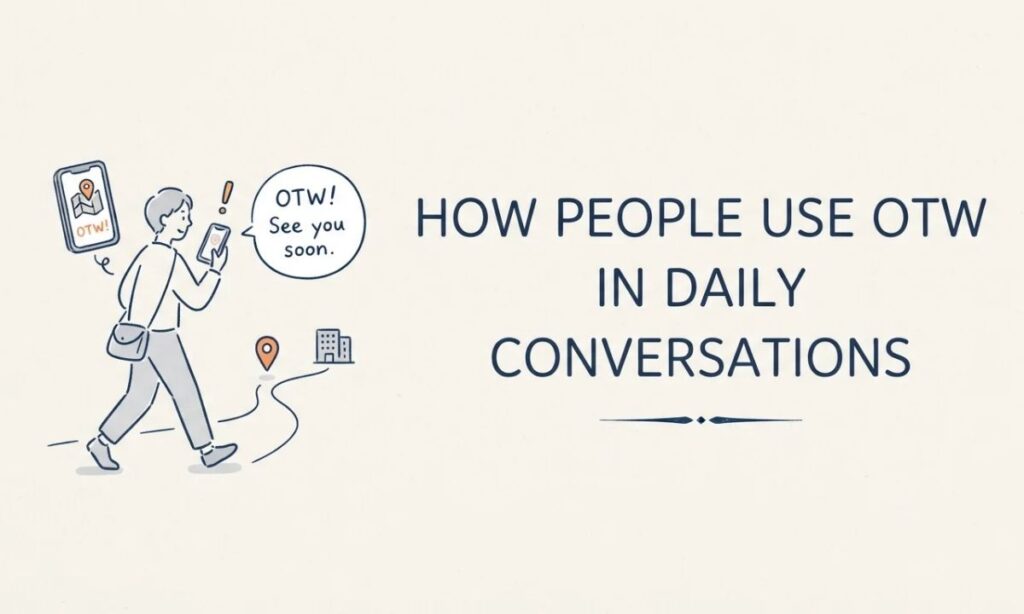
Texting Examples
“otw, be there in 10”
“Running a bit late but otw now”
Social Media Usage
On social platforms, OTW often appears in captions and Stories showing someone traveling somewhere, like an event or trip.
OTW Meaning on Social Media Platforms
On WhatsApp, the OTW meaning shows up as a quick, practical update in personal or group chats.
On Instagram, the OTW meaning shows up in Stories and captions, often paired with a travel or transit photo.
TikTok
On TikTok, OTW appears in captions about heading somewhere, sometimes for comedic effect.
Snapchat
On Snapchat, OTW works the same as texting, a fast update before arriving.
Don’t Confuse OTW With OTF or OT
OTF most often means “Only The Family,” a phrase tied to loyalty within a close group, popularized through hip-hop culture, though it can also mean “On The Fly” or “On The Floor” depending on context. OT commonly stands for “overtime” in work contexts or “off-topic” in forums. Neither shares the actual OTW meaning, so it’s worth keeping them separate despite the similar letters.
Common Confusions and Mistakes
- Assuming OTW always means the exact same thing as OMW in every context
- Sending OTW before actually leaving, which can create a mismatch with reality
- Confusing OTW with OTF or OT due to similar letters
- Using OTW in formal writing where it reads as too casual
Similar Terms and Related Slang
| Term | Meaning |
|---|---|
| OTW | On The Way |
| OMW | On My Way |
| ETA | Estimated Time of Arrival |
| BRB | Be Right Back |
Examples of OTW in Real Chat Situations
Example 1
“otw, traffic’s not too bad”
Example 2
Them: “Dinner starts soon!” You: “otw now, 10 minutes out”
Example 3
“OTW to the airport, wish me luck”
How to Reply When Someone Says OTW
Casual Replies
“Okay, see you soon!” works for most situations.
Friendly Replies
“No rush, drive safe!” adds a bit of warmth to the reply.
Is OTW Still Popular? Trends & Online Usage
Yes, the OTW meaning remains common in 2026, staying just as genuinely useful now as ever for quick travel updates across texting and social apps.
Frequently Asked Questions
What does OTW mean on Snapchat?
On Snapchat, OTW means “On The Way,” a quick update that someone has left and is heading somewhere.
Is OTW rude?
No, OTW is a practical, harmless update, not rude in any way.
What does OTW mean from a girl or guy?
The OTW meaning stays the same regardless of sender: on the way, nothing more coded than that.
Can OTW be used in formal messages?
It’s better to spell out “on the way” in professional or formal communication.
Is OTW the same as OMW?
Functionally yes, both describe the same thing and are used almost interchangeably.
Why do people use OTW instead of full words?
It’s faster to type and just as clearly understood, fitting naturally into quick texting.
What does “OTF” mean on Snapchat?
On Snapchat, OTF most often means “Only The Family,” referring to a close, loyal circle of friends.
Conclusion
The OTW meaning stays simple and practical: someone has left and is heading your way. It sits almost interchangeably alongside OMW, both built to fill that small gap of uncertainty between leaving and arriving. Once you know the pattern, reading OTW takes no effort at all.
