

IYKYK Meaning is something you’ve probably stumbled across while scrolling through Instagram captions, TikTok comments, or a group chat full of inside jokes.
It’s one of those phrases that feels instantly familiar even before you know exactly what it stands for, since the internet has a way of making acronyms spread faster than their definitions.
This guide breaks down everything IYKYK really means, where it came from, and how it’s used across different platforms and situations.
Quick Answer — What Does IYKYK Mean?
IYKYK stands for “If You Know, You Know.” It’s used to reference something — a joke, an experience, a memory, or a niche detail — that only a specific group of people will fully understand.
Instead of explaining the reference, the person simply says IYKYK, signaling that those “in on it” will get it, and everyone else doesn’t need further explanation.
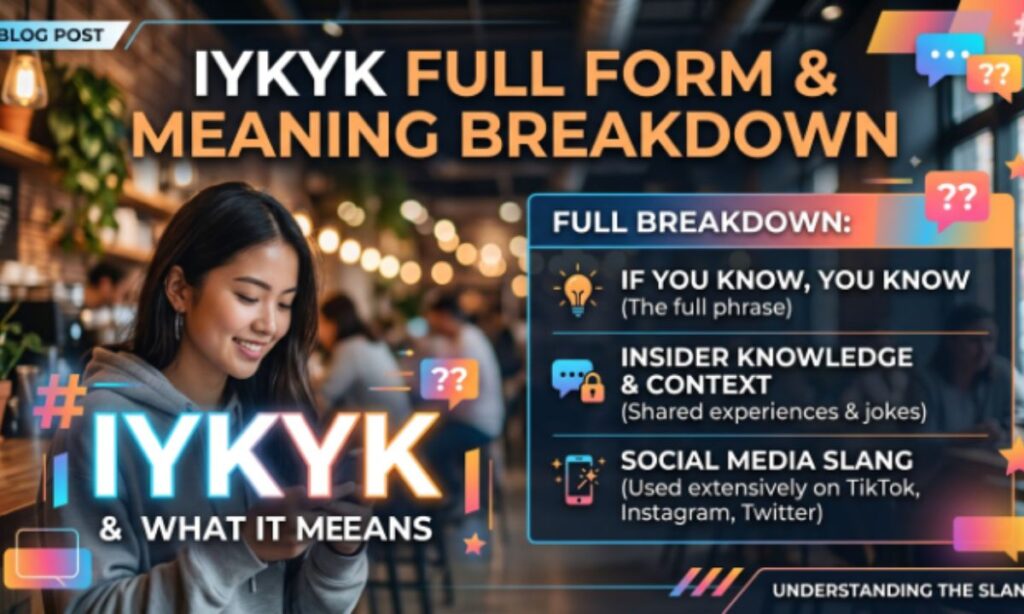
IYKYK Full Form & Meaning Breakdown
Common meanings of IYKYK
- If You Know, You Know — the core, universal meaning
- Used to imply shared experience between a specific group
- Often signals an inside joke or reference that isn’t meant to be explained further
- Can carry a sense of exclusivity or nostalgia, depending on context
Example in a sentence
Caption: “That summer road trip… IYKYK 😂”
Text: “Remember what happened at the wedding? IYKYK, I’m never explaining that story again.”
Where Did IYKYK Come From?
IYKYK grew out of the broader internet trend of turning relatable, often unspoken feelings into short, shareable acronyms.
Rather than referencing one single viral moment, it developed gradually as social media culture leaned more into captions and comments that hinted at private jokes rather than explaining them outright.
Its appeal comes from the very nature of internet communities — where being “in the know” about something niche often feels more valuable than spelling everything out for a wider audience.
How IYKYK Is Used in Texting
In texting, IYKYK usually follows a reference to a shared memory, inside joke, or experience between the people in the conversation.
It works as a shorthand way of saying “you already understand this, so I don’t need to explain further,” keeping the message short while still landing the intended meaning with the right person.
IYKYK Meaning Across Social Platforms
On Instagram, IYKYK is extremely common in captions, especially under photos referencing an inside joke, a memorable trip, or a moment only close friends or followers would understand.
TikTok
On TikTok, IYKYK often appears in captions or comments under videos referencing niche trends, fandom-specific humor, or relatable experiences that only certain viewers will immediately “get.”
Twitter/X
On Twitter/X, IYKYK is frequently used to reference community-specific humor, ongoing jokes within a fandom, or reactions to events that only certain groups followed closely.
Snapchat
On Snapchat, IYKYK tends to appear in captions attached to photos or short videos shared privately between friends, often tied to a specific shared moment from earlier in the day or a longstanding joke between the group.
IYKYK in Different Contexts
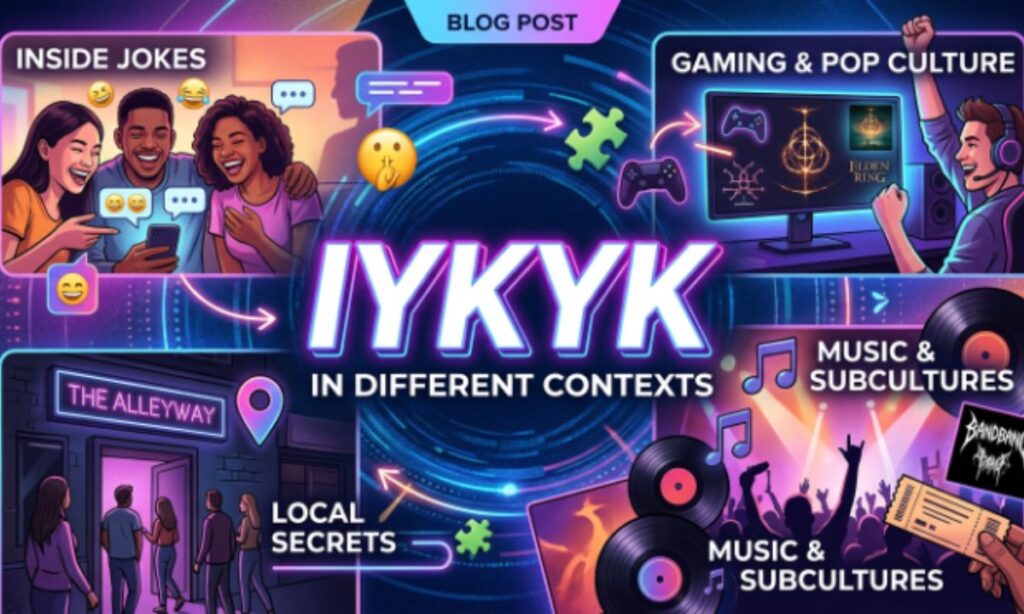
Inside Jokes & Friend Groups
This is the most common use of IYKYK — referencing something only your specific friend group would understand, without needing to explain the backstory to anyone else.
Food & Travel
IYKYK often shows up in food or travel-related posts, referencing a specific dish, hidden spot, or local experience that only people familiar with that place or cuisine would recognize.
Gaming & Fandom Communities
Within gaming and fandom spaces, IYKYK is used to reference community-specific jokes, characters, or events that only fellow fans or players would understand.
Relationships & Dating
In relationships, IYKYK can reference private jokes, nicknames, or moments between two people, often used publicly (like in a caption) while keeping the actual meaning private between the couple.
Is IYKYK Used Differently by Guys vs Girls / Age Groups?
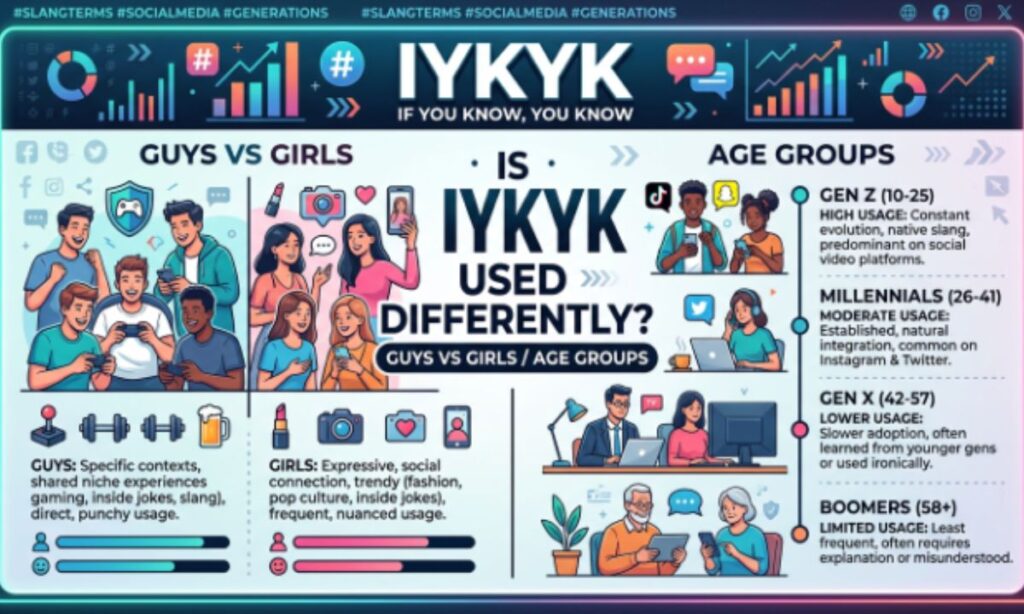
The core meaning of IYKYK stays the same across genders and age groups, but usage patterns can vary slightly:
- Younger social media users tend to use IYKYK more frequently in captions and casual posts
- Friend groups of any gender commonly use it the same way — to reference shared jokes or memories
- Older or more formal audiences are less likely to use it at all, since it’s rooted firmly in casual internet culture
IYKYK vs Similar Phrases (Comparison Table)
| Phrase | Meaning | Typical Use |
|---|---|---|
| IYKYK | If You Know, You Know | Referencing an inside joke or shared experience |
| ICYMI | In Case You Missed It | Sharing something someone may have missed |
| TBH | To Be Honest | Adding honesty or opinion to a statement |
| FR | For Real | Emphasizing sincerity or agreement |
IYKYK stands apart from these because it deliberately withholds explanation, while phrases like ICYMI and TBH are meant to add clarity rather than exclude it.
Common Misconceptions & Mistakes
Common mistake to avoid
A common mistake is using IYKYK in a context where absolutely no one in the audience actually understands the reference, which defeats its purpose.
IYKYK works best when at least a portion of your audience genuinely shares the context — otherwise, it can come across as confusing rather than intriguing.
Real Chat & Caption Examples of IYKYK
Friendly/casual example
Friend: “That night at the concert though…”
You: “IYKYK 😂 we are never speaking about it publicly.”
Caption example
“Best trip of my life. IYKYK.”
Inside-joke example
Group chat: “Should we tell them what happened at the party?”
You: “Nah, IYKYK, let’s keep it that way.”
When Should You NOT Use IYKYK?
Avoid using IYKYK in:
- Professional or formal writing, where clarity matters more than exclusivity
- Conversations with people who have zero context, since it can come across as intentionally confusing
- Important explanations, where leaving out details could cause real misunderstanding
How to Respond to IYKYK
Responses depend on whether you’re actually “in the know”:
- If you understand the reference: a simple “IYKYK 😂” or a laughing reaction works well
- If you don’t understand it: asking “wait, what happened?” is a natural, common response
- In captions, no direct response is expected — it’s more of a shared nod between people who already understand
Why IYKYK Went Viral
IYKYK spread quickly because it taps into something people naturally enjoy online: feeling like part of an exclusive group.
Captions and comments using IYKYK create curiosity for outsiders while giving insiders a small sense of connection or nostalgia, which is part of what makes the phrase so shareable and repeatable across different platforms and communities.
FAQs
What does IYKYK mean in texting?
In texting, IYKYK means “If You Know, You Know,” used to reference something only the recipient (or a specific group) would understand without further explanation.
Is IYKYK only used for jokes?
No, while it’s often used for inside jokes, IYKYK can also reference meaningful memories, private experiences, or niche interests shared between specific people.
Where is IYKYK most commonly used?
IYKYK is most common in social media captions, particularly on Instagram and TikTok, though it’s also widely used in texting and comment sections.
Is IYKYK considered rude or exclusionary?
Not typically — it’s usually lighthearted, though it can feel exclusionary if used in a context where the intended audience has no way of understanding the reference at all.
Does IYKYK have an official dictionary definition?
IYKYK isn’t a formally standardized dictionary term in most traditional dictionaries, but it is widely documented on slang-tracking sites as internet shorthand for “If You Know, You Know.”
Conclusion
IYKYK captures something simple but powerful about internet culture: the appeal of shared understanding without needing to explain everything outright.
Whether it’s tucked into an Instagram caption, dropped into a group chat, or used to reference an inside joke between friends, IYKYK works best when there’s a real, specific audience who actually knows.
Understanding when and how to use it correctly means you’ll never accidentally leave your audience more confused than curious.
