

You get a bank code, a delivery alert, or a quick “running late” from a friend. All of them arrive as an SMS. The SMS meaning is simple, but how it works and why it still matters is worth knowing. This guide covers the SMS meaning, its history, uses, and safety tips.
What Does SMS Mean?
Quick Answer (Featured Snippet)
The SMS meaning is “Short Message Service.” It is the standard way phones send short text messages over a mobile network, without needing internet or an app. One basic SMS holds up to 160 characters.
Key Takeaways
- The SMS meaning is Short Message Service.
- SMS travels over the mobile network, not the internet.
- A single message fits 160 standard characters.
- The first SMS was sent on 3 December 1992 and said “Merry Christmas.”
- SMS is not the same as WhatsApp, iMessage, or MMS.
- Banks and businesses still use it for codes and alerts.
- SMS is not end-to-end encrypted, so stay alert to scams.
Simple Meaning of SMS
Think of SMS as the original text message. Each letter in the SMS meaning has a job: “Short” for the small size, “Message” for the content, and “Service” for the network feature that delivers it.
When people say “text me,” they usually mean SMS. It works on almost every phone ever made.
How Does SMS Work?
The SMS meaning becomes clearer once you see the path a message takes.
The Role of the SMSC (Short Message Service Center)
When you press send, your phone passes the text to your carrier. The carrier’s Short Message Service Center, or SMSC, stores the message and forwards it to the receiver. If the other phone is off, the SMSC holds the message and tries again later.
Why SMS Doesn’t Need Internet
SMS uses the control channels of the cellular network, the same signaling paths phones use to stay connected. That is why the SMS meaning is tied to the mobile network and not to Wi-Fi or mobile data. If you have signal, you can send a text.
Why Messages Are Limited to 160 Characters
The limit came from the design of GSM. Engineer Friedhelm Hillebrand studied the length of postcards and telex messages and settled on about 160 characters. Messages also had to fit inside the small space on the signaling channel.
Longer texts are split into several linked parts, and carriers may bill them as multiple messages.
History of SMS
The First Text Message (1992)
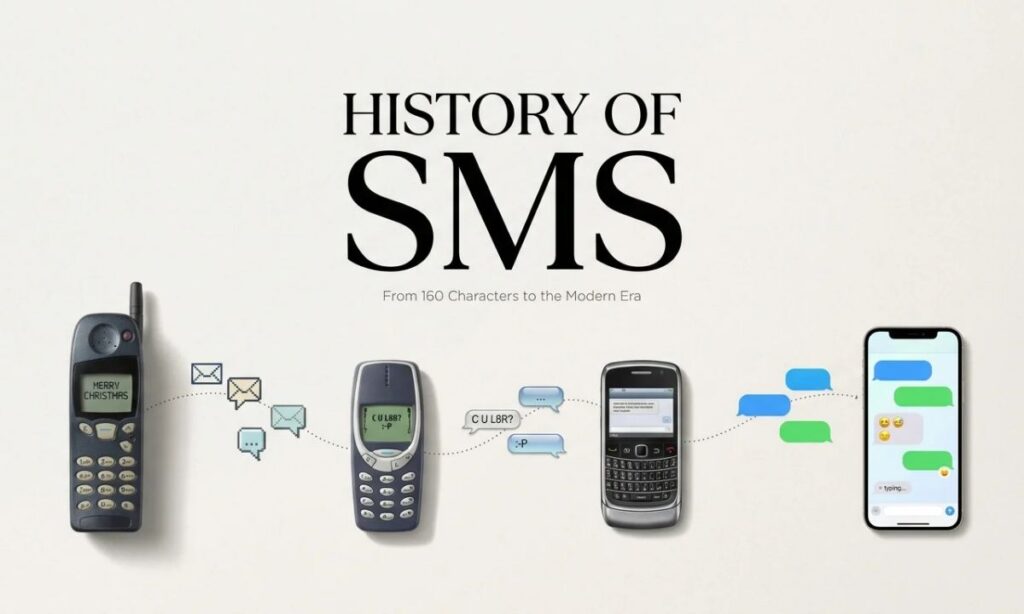
On 3 December 1992, engineer Neil Papworth sent “Merry Christmas” from a computer to Richard Jarvis at Vodafone, who received it on a handset. That message gave the SMS meaning its first real example.
From Nokia to Everyday Phones (1993)
In 1993, Nokia became the first major maker whose GSM phones let users send SMS. Early phones were clumsy for typing, but by 1994 models like the Nokia 2010 made composing easier. Texting then spread quickly.
MMS and the End of the 160-Character Limit
In the early 2000s, MMS (Multimedia Messaging Service) added pictures and video. Many phones now switch to MMS when a message goes over 160 characters or includes media. So the SMS meaning stayed the same, while MMS filled the gaps.
Table: SMS Timeline
| Year | Milestone |
|---|---|
| 1992 | First SMS, “Merry Christmas,” sent in the UK |
| 1993 | Nokia GSM phones support sending SMS |
| 1994 | Nokia 2010 makes texting easier |
| Early 2000s | MMS adds photos and video |
| Today | SMS stays in use for alerts, codes, and backup |
Where Is SMS Used Today?
1. Personal Texting
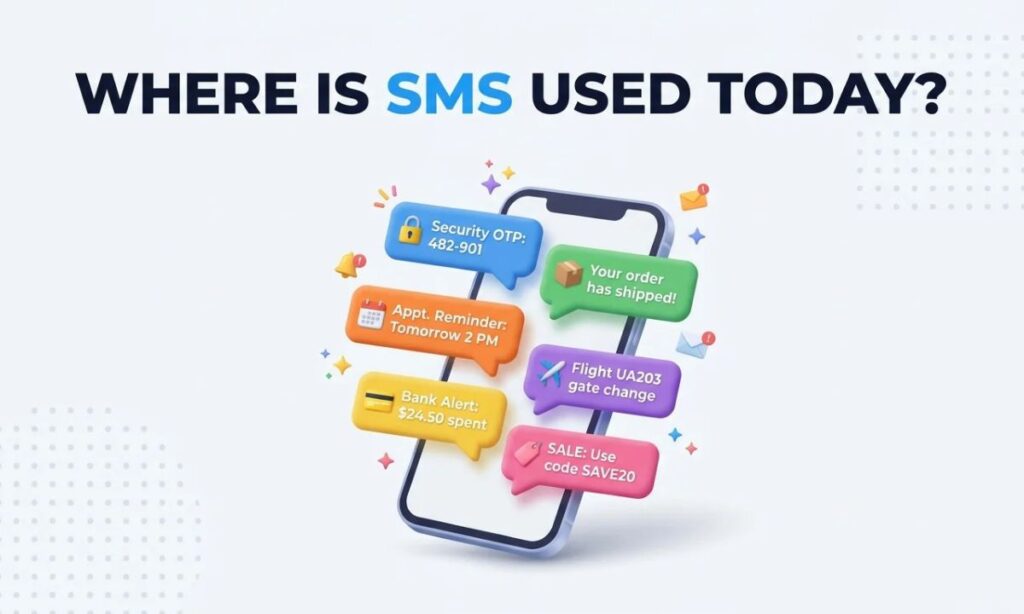
The SMS meaning still covers quick chats, especially with someone who does not use the same app.
2. Bank Alerts
Banks apply the SMS meaning daily, sending balance updates, card purchase notices, and fraud warnings because every phone can receive them.
3. Security Verification (OTP)
A one-time password (OTP) is a short code sent by SMS to confirm a login or payment. This is one of the most common uses of the SMS meaning in daily life.
4. Business Notifications
Clinics, airlines, and stores send reminders, boarding updates, and offers by SMS.
5. Emergency or Backup Communication
When mobile data fails, text messages often still go through. Authorities also use SMS for public alerts.
Why Do People Still Use SMS?
It Works Without Internet
You only need cellular signal. That makes SMS reliable in weak coverage areas.
It Works on Any Phone
Under the SMS meaning, smartphones, basic phones, and older handsets can all receive texts. No app download is needed.
Why Banks and Businesses Rely on It
Almost everyone has a phone number. So the SMS meaning, a simple message to any number, fits companies that need to reach every customer. Open rates are also high, because people tend to read texts quickly.
Real-Life Examples of SMS
1. Everyday Texting
“Running 10 mins late, start without me.”
2. Bank OTP
“Your OTP is 482916. Do not share it with anyone.”
3. Delivery Updates
“Your parcel is out for delivery today between 2 and 5 pm.”
4. No Internet Situation
You are on a road trip with no data. A short text to a friend still goes through as long as you have signal.
5. Formal Communication
“Your appointment is confirmed for Monday at 10:00 am. Reply C to cancel.”
SMS vs. Similar Terms
SMS vs. MMS
The SMS meaning covers plain text up to 160 characters. MMS carries images, audio, and video, and longer text.
SMS vs. iMessage
iMessage is Apple’s app messaging. It uses the internet and works between Apple devices. The SMS meaning applies to any phones.
SMS vs. WhatsApp
WhatsApp needs internet and an account. Unlike the SMS meaning, which is tied to your carrier, WhatsApp runs over data or Wi-Fi.
SMS vs. RCS
RCS is a newer standard that adds features like read receipts and high-quality media to default messaging apps. It generally needs data, while plain SMS does not.
Table: SMS vs. MMS vs. iMessage vs. WhatsApp
| Feature | SMS | MMS | iMessage | |
|---|---|---|---|---|
| Needs internet | No | Usually uses mobile data | Yes | Yes |
| Content | Text | Text, photos, video | Text, media | Text, media, calls |
| Works on any phone | Yes | Mostly | Apple only | Needs the app |
| Message size | 160 characters | Larger | Large | Large |
| Uses phone number | Yes | Yes | Phone or Apple ID | Yes |
Is SMS Secure?
Not fully. The SMS meaning describes convenience, not privacy. Standard SMS is not end-to-end encrypted, so carriers can process the content.
Why Banks Still Use It for OTP
Banks use SMS because it is universal and easy. Many now add app-based approvals for extra safety, but SMS remains a common first step.
How to Spot Suspicious SMS Messages
- Urgent threats such as “your account will be closed”
- Links that look odd or use shortened URLs
- Requests for passwords, PINs, or OTP codes
- Messages from unknown numbers claiming to be your bank
What to Do If You Get an Unknown SMS
- Do not click links.
- Do not share codes.
- Contact the company using its official number.
- Block and report the sender.
When Should You Use SMS?
Good Times to Use SMS
- Sending a short message to someone with poor internet
- Receiving codes and alerts
- Reaching people who do not use chat apps
- Backup communication when data is down
When Another App Works Better
- Sharing large photos or videos
- Group chats with many people
- Messaging abroad without extra charges
- Private conversations that need encryption
Common Misunderstandings About SMS Meaning
“SMS Means Internet Texting”
No. The true SMS meaning is a carrier-based text service. Internet messaging apps are different.
“SMS Is the Same as WhatsApp”
They are separate systems. WhatsApp runs on its own app and data.
“SMS Is Outdated and Useless”
Not true. Codes, alerts, and reminders still depend on it.
“SMS Messages Are Unlimited Like Apps”
Not always. Plans may limit texts, and long messages can count as several.
Other Meanings of SMS
SMS in Business and Technology
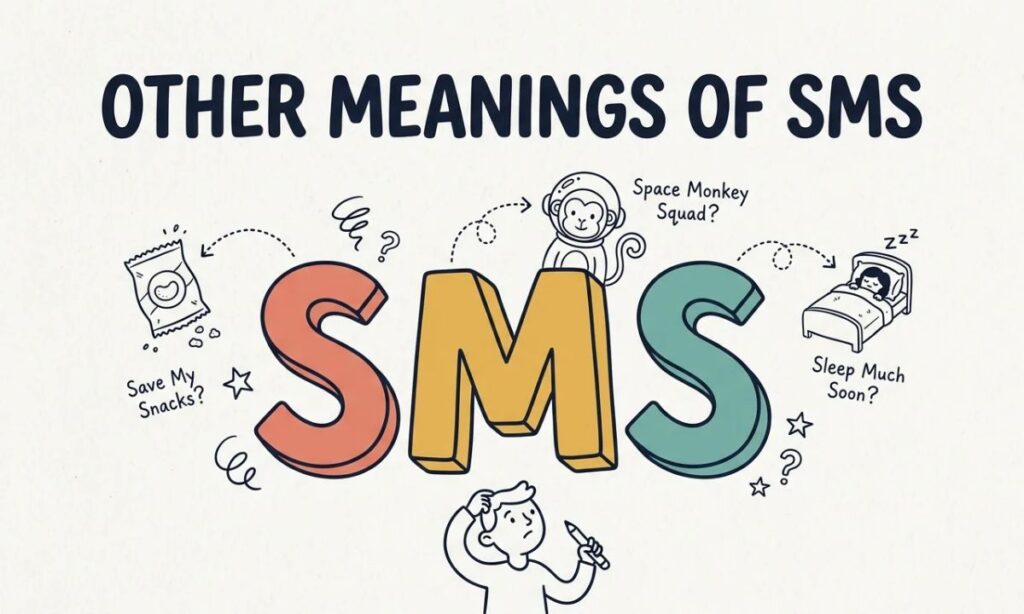
Outside phones, the letters can stand for other things. Context shows which one applies.
Table: SMS Meanings at a Glance
| Field | Meaning |
|---|---|
| Mobile and texting | Short Message Service |
| Business | Safety Management System |
| IT | Systems Management Server |
| Education | Student Management System |
| Business | Supply Management System |
Pro Tips for Using SMS Smartly
Keep Messages Short
Stay under 160 characters when you can. One part means one clear message.
Use SMS for Important Alerts
Time-sensitive notices and codes suit the SMS meaning best.
Don’t Rely Only on SMS for Chatting
For media and group talk, use a chat app and keep SMS as backup.
Be Careful With Unknown SMS
Never share OTPs or click unknown links. The SMS meaning may be simple, but scams are real.
Frequently Asked Questions (FAQ)
What does SMS mean in simple words?
The SMS meaning in simple words is a short text message sent through your phone network.
What does SMS stand for?
SMS stands for Short Message Service.
Is SMS the same as texting?
Mostly yes. The SMS meaning is what people usually imply by “texting,” though app messages are also called texts.
Do SMS messages need internet?
No. The SMS meaning is network-based, so you only need signal.
Why do banks use SMS?
Banks use SMS because it reaches any phone and delivers codes fast.
What is the difference between SMS and MMS?
SMS carries short text. MMS carries pictures, video, audio, and longer messages.
When was the first SMS sent?
The first SMS was sent on 3 December 1992 and read “Merry Christmas.”
Final Thoughts
The SMS meaning is Short Message Service, a simple text system built into the mobile network. It works without internet, runs on any phone, and still powers alerts and verification codes in 2026. Use it for short, important messages, and stay careful with unknown senders.
