

Few abbreviations swing between friendly and hostile as sharply as STFU. Depending entirely on who’s sending it and how, the STFU meaning can land as an excited reaction to shocking news or a genuinely harsh way to shut someone down.
This guide breaks down the full STFU meaning, how tone changes everything, and how to read it correctly.
Quick Answer
STFU stands for “Shut The F*** Up.” Depending entirely on tone, the STFU meaning can be a playful, excited reaction, like “no way, that’s insane!”, among friends, or a genuinely aggressive way to tell someone to stop talking. The same three letters carry very different weight depending on context.
Key Takeaways
- Full form: “Shut The F*** Up,” a strong, profanity-based phrase shortened for texting.
- Playful use: Often reacts to shocking, exciting, or unbelievable news among close friends.
- Aggressive use: Can be a genuinely hostile way to tell someone to stop talking.
- Tone is everything: Emojis, punctuation, and relationship context decide which meaning applies.
- Not for everyone: Best kept to close, casual relationships rather than strangers, coworkers, or professional settings.
The Same Three Words, Wildly Different Intent
What makes the STFU meaning so tricky is just how far apart its two main uses sit. On one end, it’s practically a compliment, reacting to something so surprising it warrants an exaggerated response.
On the other, it’s a blunt, hostile demand for silence. Almost no other piece of slang stretches quite this far between warmth and aggression.
What Does STFU Mean in Text & Chat?
In texting and chat, the STFU meaning depends heavily on context, more so than most abbreviations out there. It’s most often used either as an exaggerated reaction to surprising news or as a sharp, sometimes genuinely angry way to tell someone to stop talking.
Quick Chat Examples
“Wait STFU, you got the job?!”
“STFU, I don’t want to hear it right now.”
Full Form of STFU
The full form behind the STFU meaning is “Shut The F*** Up,” a strong phrase softened slightly by being reduced to an abbreviation, though the underlying words remain the same regardless of tone.
When Is STFU Playful, and When Is It Aggressive?
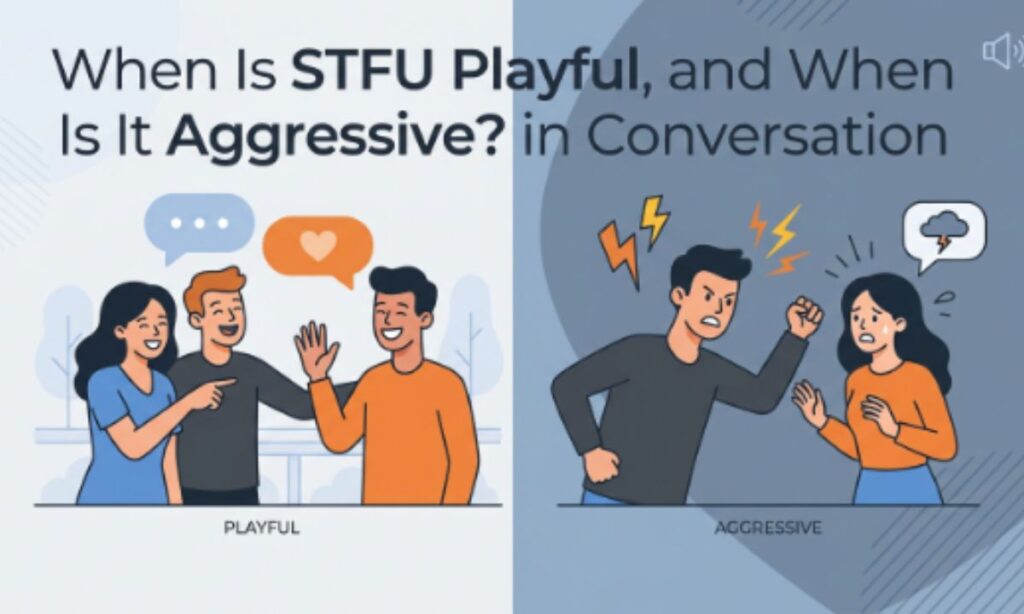
Playful Use (Surprise, Excitement, Disbelief)
In this playful sense, the STFU meaning functions almost like “no way!” or “are you serious?!”, reacting to genuinely surprising or exciting news among friends.
Aggressive or Hostile Use
In its harsher form, the STFU meaning becomes a direct, forceful demand for someone to stop talking, often used in anger or frustration.
Sarcastic Use
The STFU meaning can also carry a sarcastic edge, used dismissively in response to something someone said, without necessarily reaching full hostility.
How Emojis Change the Meaning of STFU
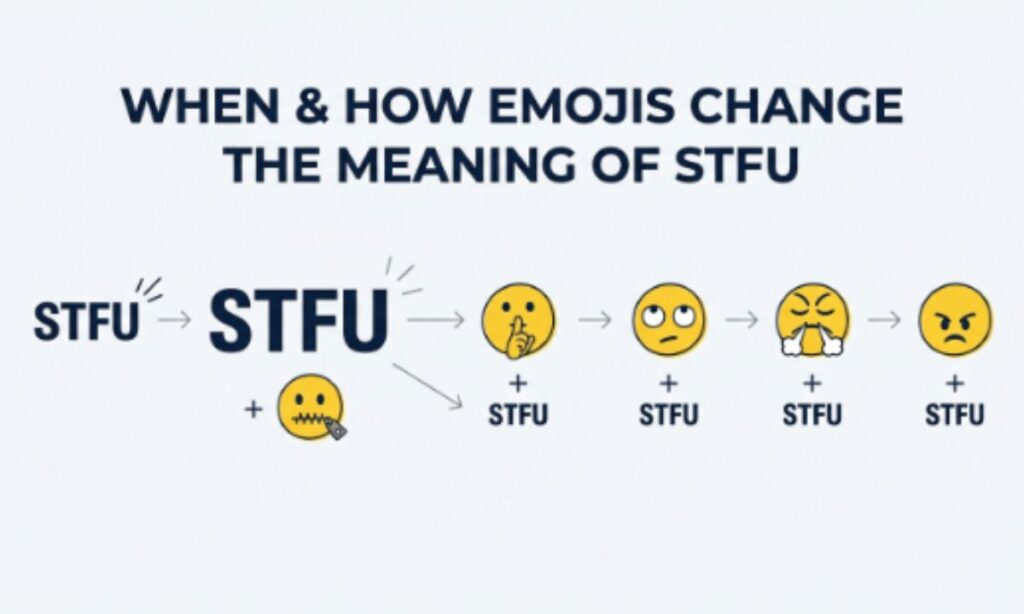
Emojis genuinely do a lot of heavy lifting in clarifying the STFU meaning. Paired with laughing emojis or exclamation points, it almost always reads as excited disbelief.
Paired with angry emojis, all caps, or no softening at all, it reads as genuinely hostile. The same three letters can flip entirely based on what surrounds them.
Where Did STFU Come From?
The STFU meaning grew out of early internet and texting culture, joining a broader family of blunt, profanity-based abbreviations that became common shorthand as online communication expanded.
Over time, its use broadened well beyond genuine hostility, picking up the more playful, exaggerated-reaction meaning common today.
Situations Where You Should Avoid STFU
The STFU meaning is best avoided with strangers, acquaintances, coworkers, or anyone who might not immediately read the intended tone correctly. It’s also worth avoiding in any conversation already carrying real tension, where even a playful use could easily be misread.
When Is It Okay to Use STFU?
Among close friends who already understand each other’s texting style, the playful STFU meaning works well as an exaggerated, harmless reaction to surprising news. The key is a relationship where tone is already easy to read correctly.
Who’s Texting You “STFU”? What It Really Means
From a Girl
When a girl texts “stfu,” it’s most often the playful, excited version, reacting to something surprising rather than expressing genuine anger, though context still matters.
From a Guy
The STFU meaning genuinely doesn’t shift based on who’s sending it. From a guy, it typically follows the same pattern, playful in casual banter, sharper if the conversation carries real frustration.
STFU Meaning on Social Media Platforms
TikTok
On TikTok, STFU frequently appears in comments reacting to shocking or funny content, almost always in its playful sense.
On Instagram, STFU shows up similarly, often used as an exaggerated reaction to surprising posts or stories.
Snapchat
On Snapchat, STFU tends to appear in personal chats, where tone is usually easier to read given the closeness of the relationship.
On WhatsApp, STFU is used casually among friends and family, generally leaning toward the lighter, more playful meaning.
Common Confusions and Mistakes
Thinking It’s Always Aggressive
Many people assume the STFU meaning is always hostile, overlooking how common its playful, excited use has become.
Using It With Strangers
Sending STFU to someone unfamiliar with your texting style risks it being read far more harshly than intended.
Using It in Professional Settings
Because of its profanity-based full form, STFU is never appropriate in workplace or formal communication.
Softer Alternatives to STFU
For situations where a gentler tone feels more appropriate than the full STFU meaning, alternatives like “no way,” “wait, seriously?”, or “shut up (in a good way!)” can express the same surprise without the sharper edge.
Examples of STFU in Real Chat Situations
Funny/Shocked Example
“STFU you didn’t actually do that 😭”
Angry Example
“STFU, I’m not in the mood right now.”
Gaming Chat Example
“STFU that clutch was unreal.”
How to Reply When Someone Says STFU
If It Sounds Playful
A laughing reaction or continuing the story naturally usually fits the moment.
If It Sounds Angry
Giving the other person space, or calmly asking what’s wrong, is often the better response.
If You Feel Uncomfortable
If the aggressive version of STFU genuinely upsets you rather than reading as casual banter, that feeling is worth taking seriously rather than brushing off or matching the same tone back. It’s completely reasonable to say directly that the message didn’t sit right with you.
Should I Use STFU at Work?
No. Regardless of tone, STFU’s underlying profanity makes it inappropriate for workplace messages, emails, or any professional communication.
Is STFU Still Popular? Trends & Online Usage
Yes, the STFU meaning remains widely used in 2026, especially in its playful, reactive form across texting, comments, and social media among younger users everywhere.
Frequently Asked Questions
What does STFU mean in texting?
STFU stands for “Shut The F*** Up,” used either playfully as an exaggerated reaction or aggressively to tell someone to stop talking.
Is STFU rude?
The STFU meaning can be rude, depending on tone, though it’s frequently used in a lighthearted, non-serious way among close friends.
What does STFU mean on TikTok?
On TikTok, STFU is most often used playfully, reacting to shocking or funny content in comments.
Can STFU be friendly?
Yes, among friends, it’s often an exaggerated, harmless reaction to surprising or exciting news.
Is it offensive to use STFU?
It can be, particularly with people unfamiliar with your tone or in more sensitive conversations, so context matters a great deal.
Why do people say STFU with emojis?
Emojis help clarify tone, signaling whether the message is meant playfully or with genuine frustration.
Conclusion
The STFU meaning stretches across an unusually wide emotional range, from an exaggerated compliment among friends to a genuinely hostile demand for silence.
Tone, emojis, and relationship context do almost all the work of deciding which version applies. Reading those cues carefully is really the only reliable way to know exactly how STFU was meant.
