

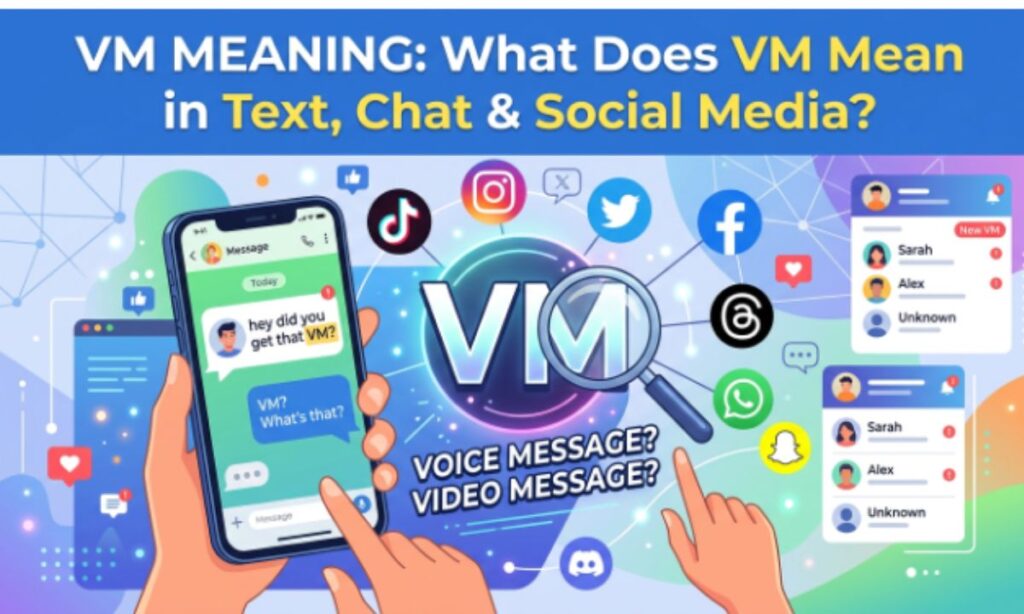
VM meaning confuses a lot of people the first time they see it in a text or comment. Someone might text you “sent a VM” or write “check ur VM” on Instagram, leaving you wondering what it actually stands for. The truth is, VM doesn’t have just one fixed meaning — it changes depending on the app, the context, and even who you’re talking to.
This guide breaks down every common VM meaning in texting and on social media, shows you real examples, and helps you figure out exactly what someone meant when they used it.
What Does VM Mean? (Quick Answer)
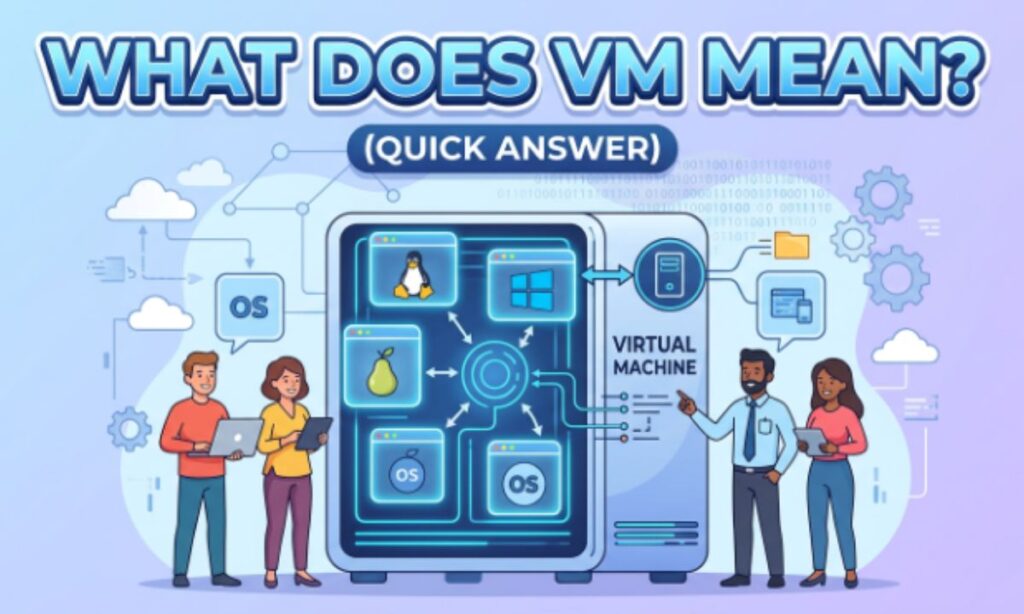
VM most commonly stands for “Voice Message” or “Voicemail.” In texting and chat apps like WhatsApp, Instagram, and Messenger, VM usually refers to an audio clip someone recorded and sent instead of typing. On phone-related conversations, VM often means “voicemail” — a recorded message left when a call isn’t answered.
Outside of texting, VM can also mean “Video Message” or, in a tech context, “Virtual Machine.”
VM Meaning Explained: What Does VM Stand For?

VM is an abbreviation, not a single fixed word — its expansion depends entirely on context. Here’s a quick breakdown:
| Meaning | Context Used In |
|---|---|
| Voice Message | Texting, WhatsApp, Instagram, Snapchat |
| Voicemail | Phone calls, business texts |
| Video Message | Social media, dating apps |
| Virtual Machine | Tech, IT, cloud computing |
The most reliable way to know which meaning applies is to look at the platform and the sentence around it — something we’ll cover in detail below.
Common Meanings of VM in Texting
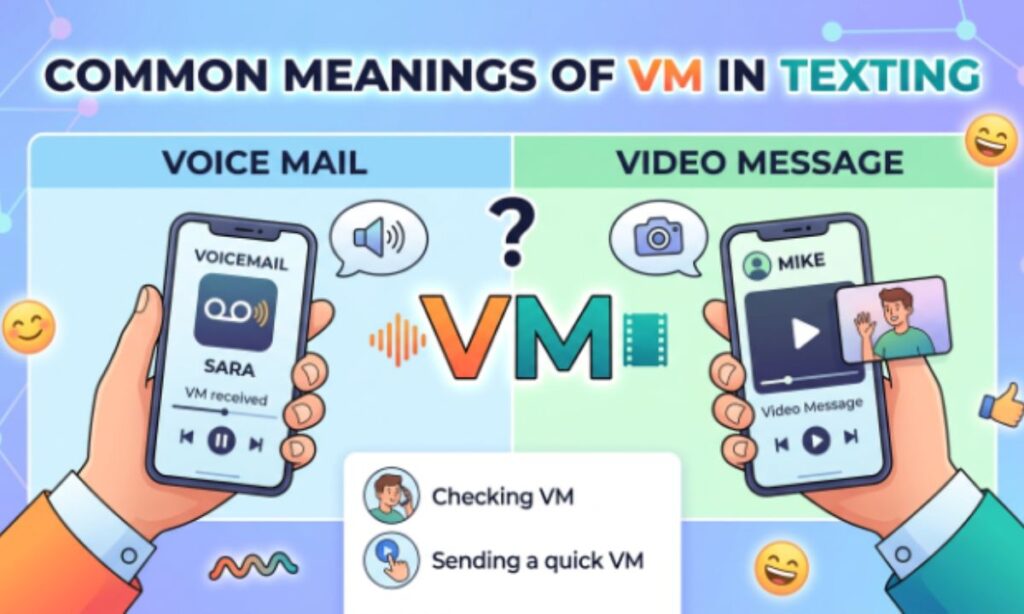
VM Meaning as Voice Message
In everyday texting, VM most often means Voice Message — a short audio recording sent through a messaging app instead of a text.
Example: “Too tired to type, sending a VM instead.”
This usage is extremely common among younger texters and on mobile-first chat apps where recording audio is quick and easy.
VM Meaning as Voicemail
When someone misses a call, VM can mean Voicemail — the automated system that records a message when you don’t pick up.
Example: “Called you twice, left a VM.”
This meaning is more common in professional or phone-based conversations rather than app-based chats.
VM Meaning as Video Message
On some platforms, especially those that support quick video clips, VM can stand for Video Message.
Example: “Didn’t have time to write it all out, so here’s a VM explaining everything.”
This usage is less common than voice message but still appears, particularly on dating apps and video-first platforms.
VM Meaning as Virtual Machine
In tech, coding, and IT circles, VM almost always refers to a Virtual Machine — a software-based emulation of a computer system.
Example: “I’m running Linux on a VM so I don’t mess up my main OS.”
This meaning is unrelated to texting slang and is used almost exclusively in technical conversations.
VM Meaning on Social Media Platforms
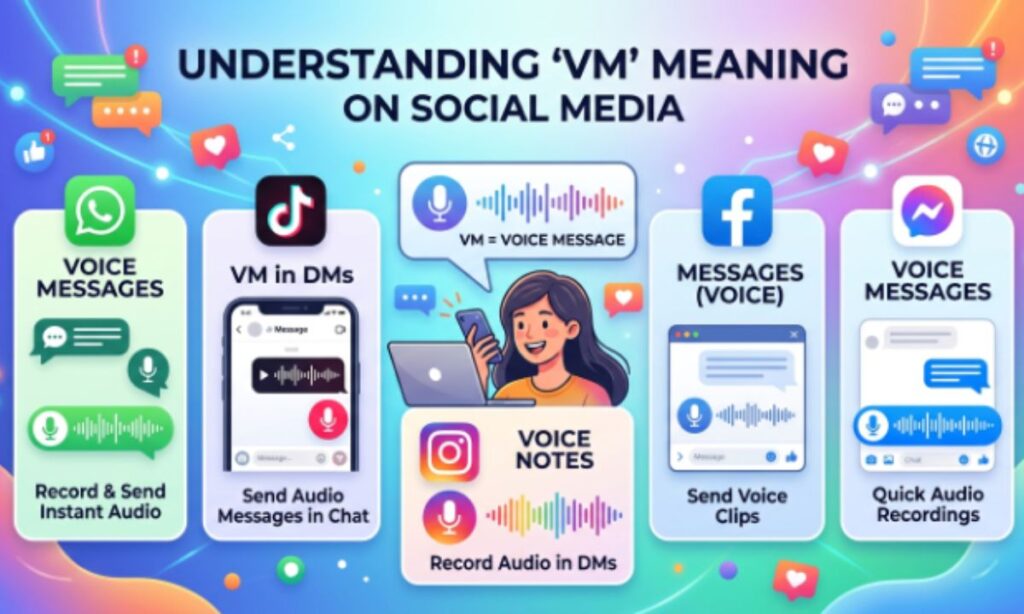
The meaning of VM can shift slightly depending on which app you’re using. Here’s how it typically breaks down:
VM Meaning on WhatsApp
On WhatsApp, VM almost always means Voice Message, since the app has a dedicated microphone icon for recording and sending audio clips instantly.
VM Meaning on Instagram
On Instagram, especially in DMs, VM usually refers to a Voice Message or occasionally a Video Message shared in a chat thread.
VM Meaning on Snapchat
On Snapchat, VM can mean Voice Message, since Snapchat supports quick audio snaps sent directly in chat.
VM Meaning on TikTok
On TikTok, VM is less common but generally refers to a Voice Message sent through TikTok’s direct messaging feature.
VM Meaning on Facebook
On Facebook, VM typically means Voice Message or Voicemail, depending on whether it’s used in Messenger chat or in reference to a missed call.
VM Meaning on Messenger
On Messenger, VM most often means Voice Message, since the app allows users to record and send audio notes within a conversation.
VM Meaning in Real Conversations (Examples)
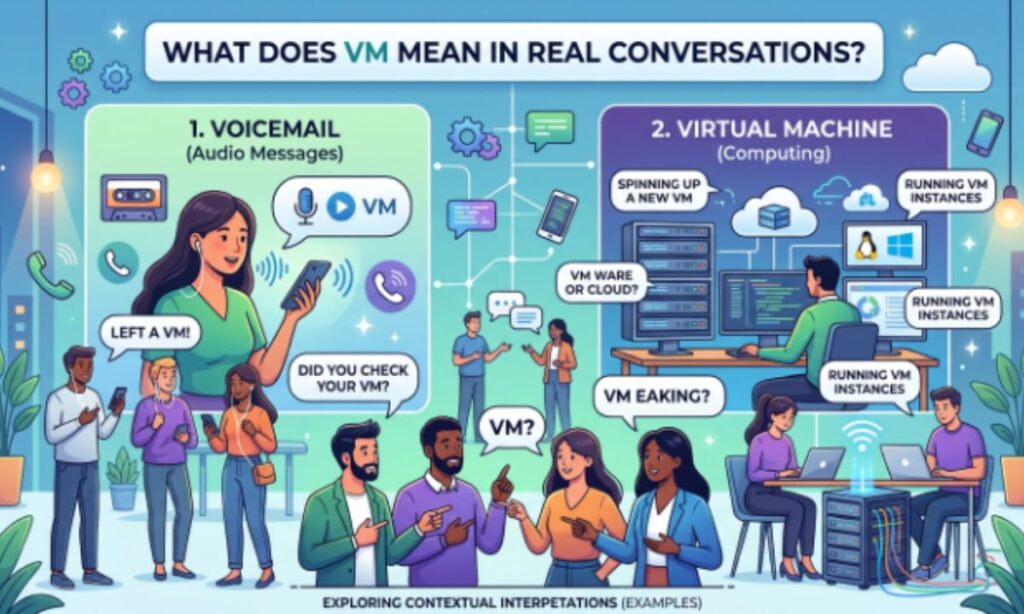
Seeing VM used in real sentences makes the meaning much clearer.
Voice Message & Voicemail Examples
- “Just drop me a VM, easier than typing it all out.”
- “Missed your call, left you a VM with the details.”
- “Listen to the VM I sent, I explained everything there.”
Video Message & Virtual Machine Examples
- “Recorded a VM instead of writing a paragraph, watch it when you can.”
- “Set up a new VM to test the software before deploying it.”
- “Our team spins up a VM for every client project to keep environments separate.”
When Should You Use VM in Texting?
When VM Is Appropriate
- Casual chats with friends or family
- Quick replies when typing feels slower than talking
- Informal work chats where audio notes are common
- Group chats familiar with texting abbreviations
When to Avoid Using VM
- Formal emails or business documents
- First-time conversations with clients or employers
- Any message where clarity matters more than speed
- Conversations with people unfamiliar with texting slang
Other Meanings of VM (Tech & Business)
Beyond texting, VM shows up in several professional and technical fields:
- Virtual Machine – A simulated computer environment used in software development and cloud computing.
- Visual Merchandising – A retail term referring to how products are displayed in stores.
- Vice Marshal / Vice Manager – Occasionally used as a shorthand title in some organizations.
- Value Management – A business term related to optimizing project value versus cost.
VM vs Other Texting Abbreviations
It’s easy to confuse VM with similar-looking texting abbreviations. Here’s how they differ:
VM vs VN
VN typically stands for “Voice Note,” which is nearly identical to Voice Message but used more often on apps like WhatsApp and Telegram in certain regions.
VM vs PM
PM stands for “Private Message,” referring to a direct, one-on-one message sent away from a public chat or comment thread — unlike VM, which refers to the format (audio/video), not privacy.
VM vs DM
DM means “Direct Message,” commonly used on platforms like Instagram and Twitter/X to describe private messaging, while VM specifically refers to a voice or video note within that conversation.
| Abbreviation | Meaning | Common Platform |
|---|---|---|
| VM | Voice/Video Message or Voicemail | WhatsApp, Instagram, Messenger |
| VN | Voice Note | WhatsApp, Telegram |
| PM | Private Message | Forums, Reddit |
| DM | Direct Message | Instagram, Twitter/X |
Why Do People Use VM in Texting?
People use VM for a few practical reasons:
- Speed – Recording a voice message is often faster than typing long explanations.
- Tone clarity – Audio conveys emotion and tone better than text alone.
- Convenience – It’s easier while multitasking, driving, or walking.
- Habit and trend – Many texting abbreviations, including VM, have simply become part of everyday digital language.
Is VM Casual or Formal?
VM is generally considered casual slang and is best suited for informal conversations. In professional or formal writing, it’s better to spell out “voice message” or “voicemail” to avoid confusion, since not everyone is familiar with the abbreviation.
FAQs About VM Meaning
What does VM mean in texting?
VM usually means “Voice Message” in texting, referring to an audio clip sent instead of a typed message.
What does VM mean on WhatsApp?
On WhatsApp, VM typically stands for “Voice Message,” sent using the app’s built-in microphone feature.
Can VM mean voicemail or voice message?
Yes, VM can mean both — voicemail relates to missed phone calls, while voice message refers to audio sent in a chat app.
What does VM mean in technology?
In tech, VM stands for “Virtual Machine,” a software-based simulation of a physical computer.
Is it okay to use VM in formal writing?
No, it’s best to avoid VM in formal writing and use the full term “voice message” or “voicemail” instead for clarity.
Final Thoughts
VM is one of those texting abbreviations that changes meaning depending on where and how it’s used. In casual chats and on most social platforms, it almost always refers to a voice message or voicemail. In tech conversations, it means something entirely different — a virtual machine.
The safest way to understand VM is to look at the context: if you’re chatting with a friend, it’s likely audio-related; if you’re in a tech discussion, it’s probably about virtual computing. Once you know the context, decoding VM becomes second nature.
